About
Towards a new vocabulary of translation studies
About Translating Through Time
Translating Through Time seeks to understand how literary translation has become (per Umberto Eco) the very language of Europe by taking a historicist perspective. Critically complementing the Presentism in current research on translation, our Network investigates dynamic transformations in the theory and practice of translation as a wide-spread literary and cultural phenomenon in Europe, from the late Middle Ages to the mid-nineteenth century.
The network’s added value is both conceptual and analytical.
Conceptual
The premodern period is largely neglected in contemporary Translation Studies, where most significant theoretical concepts derive chiefly from contemporary, post-1990s perspectives and sources.
Not only is the practice and theory of translation itself far older; the period this Network studies is key for the present discipline's conceptual foundations.
Analytical
The premodern period was one of ‘looking forward’, characterized by a rise in vernacular cultures and translations between them, and also of ‘looking back’, with the rediscovery, translation, and adaptation of works from the Classical past. It was also a time of increased literacy and changing reading publics: a period in which the actors of translation, and the roles they played, became increasingly varied.
Translation at this time was a highly dynamic, multimedia space: with the technological innovations marking the transition from manuscript to print culture arose a proliferation of media that transformed the production, circulation and reception of literature.
Our transnational focus on Europe as a space of social and cultural mobility transcends existing grand narratives, using exemplary case studies to examine and compare particular instances of significance or transition. Taking a historicist, longue durée approach currently lacking in the field, our long timespan is a particular strength of the project. Our network is thoroughly multidisciplinary, with a core group working on different historical and cultural contexts. Bringing together 18 units from 13 universities, the Network connects this core with scholars from across the Humanities, contributing methodological insights for particular research objectives.
This additional expertise allows us to examine the continuities and discontinuities of Translating Through Time in its multiple dimensions.

Key Questions
Translating through Time will address the following pressing concerns in the field of Translation Studies
1
Key concepts of translation
Our project aims to contribute to Translation Studies by working towards a co-created historicized vocabulary, developing an online glossary that compiles key terms, as they first appeared and were further conceptualized in historical documents.
2
Actors of
translation
Our project ties in with the recent focus on translators as actors of change through history. We will study these actors’ individual and collective contributions to literary change (not only by translators but also by editors, publishers, printers, and even readers). How did such actors see their translational activity: as a humanistic endeavour, a commercial enterprise, an activity of leisure, or a combination? How should we understand the relational agency of the various actors, both individual and collective, who made translations happen? What international networks and institutions sustained and facilitated them?
3
Media of
translation
Our project ties in with the recent focus on the mediality and materiality of translation. For instance, how did paratextual sources (prefaces, dedications, etc.) function as sites of reflection on practice and as textual carriers for a continuously evolving vocabulary of translation? How did actors of translation make use of various media (print and manuscript, books and periodicals, etc.), and how did their reception of these media produce meta-discourses that in turn affected practice? What does a book history and socio-literary approach that foregrounds actors and materiality reveal about a field that is traditionally textual-studies oriented?
Core Group
This Network builds on – and expands – existing research and education collaborations between Exeter, Leuven, Ghent, and Leiden and brings together the expertise and data gathered by collaborators through several ongoing research projects on translation history.

Michelle Bolduc
Michelle Bolduc is Professor of Translation Studies (Exeter; HCTI-Université de Bretagne Occidentale), and has published extensively on the intersections of medieval literature, translation, and rhetoric, including her books Translation and the Rediscovery of Rhetoric (2020) and The Medieval Poetics of Contraries (2006).
She is co-editor of two volumes, forthcoming in 2024: first, with Marie-Alice Belle, Translation in An Age of Cross-Cultural Interaction, 1100-1600, volume 3 of the 12-volume series, Translation: A Cultural History (general editor, Lieven D’hulst); second, with Emma Cayley and Thomas Hinton, Imagining Courtly Communities: The Network and The Individual.
Her research also comprises modern rhetoric and its translation; see her co-authored book (with David A. Frank) of translations and commentaries The Intellectual and Cultural Origins of Chaïm Perelman and Lucie Olbrechts-Tyteca’s New Rhetoric Project (2023).

Freyja Cox Jensen
Freyja Cox Jensen is Associate Professor of Early Modern History at the University of Exeter, UK, where she works on classical reception, the histories of the book and of printing and performance, and historical translation studies. She read Ancient and Modern History at Christ Church, Oxford, before going on to complete her MSt and DPhil there.
After a year spent as a Stipendiary Lecturer at Merton College, Oxford, she returned to Christ Church in 2010 to take up a Junior Research Fellowship, before joining the University of Exeter in 2012. She is co-director of Exeter’s Centre for Early Modern Studies, and Centre for Environmental Arts and Humanities.
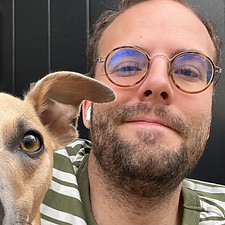
Brecht de Groote
Brecht de Groote is a tenure-track Assistant Professor of English in the Faculty of Arts & Philosophy of the University of Ghent in Belgium. He previously held (post)doctoral positions at the Universities of Edinburgh and Leuven.
His research focuses on the literature and culture of the Romantic period, extending into the eighteenth century and the late-Romantic 1840s and 1850s.
Combining methods at the intersection of literary theory, media theory and translation theory, he investigates the ways in which British culture was shaped by practices and ideas of mediation and translation. Brecht has a monograph with Edinburgh University Press, Thomas De Quincey: Romanticism in Translation, and has published in a range of journals. He is currently working on a new book project provisionally titled Pseudo-Romanticism, which is to examine how the Romantics imagined interlinguistic and intermedial transfers.
.jpg)
Helena Taylor
Helena Taylor is an Associate Professor of French and Comparative Literature at the University of Exeter, where she was previously a Leverhulme Early Career Fellow. She holds a BA in French and Latin (2007), an Mst in European Literature (2008) and a DPhil in French Literature (2013) from the University of Oxford. Her research focuses on the intellectual and literary history of early modern France, particularly the seventeenth century, with interests in cultures of learning, women's varied intellectual practices and their reception, classical reception, translation studies and cultural quarrels.
She is the author of Women Writing Antiquity: Gender and Learning in Early Modern France (Oxford University Press, 2024) and The Lives of Ovid in Seventeenth-Century French Culture (Oxford University Press, 2017), and co-editor, with Fiona Cox, of Ovid in French: Reception by Women from the Renaissance to the Present (Oxford University Press, 2023) and, with Kate Tunstall, of a special issue of Romanic Review entitled Women and Querelles in Early Modern France.

Beatrijs Vanacker
Beatrijs Vanacker holds a PhD in French literature and is currently affiliated with KU Leuven as an associate professor in French Literature and Literary Translation. She previously held postdoctoral fellowships from the FWO, during which she was a research fellow at LMU München and McGill (Montréal). Her current research focuses on cultural transfer and literary translators in the long eighteenth century.
She published widely on (pseudo)translation and eighteenth-century (women) translators and visibility. She was co-PI of the FWO project "Shaping Belgian Literature" and PI of the KU Leuven research fund project "Found in Translation". As from 2026, she is co-PI of the FWO project "Putting translators on the map. Strategies of paratextual (self-)representation in literary French/Dutch translations in the Low Countries (1815-1860 | 1990-2020)", with Francis Mus (UGhent).
Together with Helena Taylor and Freyja Cox Jensen, she was guest editor of a special issue on the visibility of translators as cultural agents in the Early Modern Period, published in Perspectives (2025).

Alisa van de Haar
Alisa van de Haar is an Assistant Professor of French literature at Leiden University. She obtained her PhD cum laude from the University of Groningen in 2018. Her research interests include historical multilingualism, the history of language education, and the intersection of migration and language. She particularly focuses on the sixteenth- and seventeenth-century Low Countries, and the interplay between French and Dutch literary culture. In 2019, her monograph The Golden Mean of Languages: Forging Dutch and French in the Early Modern Low Countries, 1540–1620 was published by Brill.
She is the co-editor, with Dirk Schoenaers, of Francophone Literature in the Low Countries (1200–1600) (Amsterdam University Press, 2021). From 2026 to 2031, she leads the ERC-funded research project 'LangPro: Professional Opportunities in the Early Modern Language Sector (1550-1650)' and the Dutch Research Council-funded Vidi-project Leveraging Language, Proclaiming Power: Linguistic Politics in Early Colonial North America'.
Noreen Humble
Noreen Humble is professor of Classics at the University of Calgary, and the associate director of the Calgary Institute for the Humanities. She has published widely on the ancient Greek authors Xenophon and Plutarch and on their reception, especially in the early modern period.
Her monograph Xenophon of Athens: A Socratic on Sparta (Cambridge University Press 2021) won the Mark Golden Book Award. With Keith Sidwell and Jeroen De Keyser, she published Henri Estienne: On Books (Ghent: Lysa, 2022), the first collection of Latin texts and English translations of Estienne’s major neo-Latin writings.
Current research projects all focus on translations through time, including a biography of Xenophon’s Cyropaedia (covering its ‘life’ from its inception in the 4th century BCE to the 21st century), and, with Freyja Cox Jensen (Exeter) and Fred Schurink (Manchester), a project entitled ‘Early modern colonialism and the reinvention of ancient history’, a re-examination of the complex reception history of ancient Latin and Greek histories in the volatile and rapidly changing early modern world, through the lens of book history and translation studies.
Eleonora Buonocore
Eleonora Buonocore is Associate Professor of Italian Studies at the University of Calgary, Alberta (Canada). She holds a PhD in Medieval Philosophy from University of Siena (2009) and a PhD in Italian Studies from Yale University (2016). Her research lies at the intersection between philosophy and literature in the Middle Ages and early Renaissance.
She has published articles in Studia Lulliana on Ramon Lull and Lullism, in Studium on Dante, as well as chapters on Boccaccio and Giordano Bruno. Together with Giulia Cardillo she co-edited the volume Imagined Networks in Pre- Modern Italian Literature: Literary Mothers, Literary Sisters, Lexington Books (2024), where she wrote a chapter on Catherine of Siena's letters to women correspondents.
She is currently working on a monograph on the concept of memory in Dante’s Divine Comedy, and on the first modern edition and translation of La Floria, a Renaissance comedy in the style of Plautus, written by the Intronato Antonio Vignali, and published by Ludovico Domenichi in Florence in 1560.
Keith Sidwell is Professor Emeritus of Latin and Greek at University College Cork and Adjunct Professor of Classics at the University of Calgary. He has published widely on ancient Greek literature (especially tragedy, comedy and Lucian of Samosata), including a translation, Lucian: Chattering Courtesans and other Sardonic Sketches (Penguin Classics 2004) and a monograph, Aristophanes the Democrat: The Politics of Satirical Comedy during the Peloponnesian War (Cambridge University Press 2009).
He has also published editions and translations of Neo-Latin texts never before available in English: from Ireland, The Tipperary Hero: Dermot O'Meara's Ormonius (1615), with David Edwards (Brepols 2011) and Poema de Hibernia: A Jacobite Epic on the Williamite War, with Pádraig Lenihan (Dublin Irish Manuscripts Commission 2018); from France, Henri Estienne: On Books (Ghent: Lysa 2022), with Noreen Humble and Jeroen De Keyser; and from Italy, Poggio Bracciolini: On Leaders and Tyrants (Harvard University Press 2024) with Hester Schadee.
His most recent publication, Lucianus Samosatensis for the Catalogus Translationum et Commentariorum, is a two-volume list, with detailed commentary, of the Latin and Vernacular translations of Lucian of Samosata between c. 1400 and 1600 (CTC vol. 14. I and II, Toronto: Pontifical Institute of Medieval Studies, 2025).
Keith Sidwell
Rachel Friedman
Rachel Friedman is Associate Professor (Teaching) in the Arabic & Muslim Cultures program at the University of Calgary. She holds a PhD from the University of California, Berkeley, and specializes in classical Arabic literature and Islamic thought.
She has published articles in The Muslim World on Qurʾānic intertextuality in the work of the Sufi poet ʿĀʾisha al-Bāʿūniyya, in Revista Al-Qanṭara and Prooftexts on scriptural intertextuality in Andalusi poetry, in Der Islam on literary approaches to the Qurʾān, and in The Journal of Arabic Literature on the idea of the literary inimitability of the Qurʾān in classical Arabo-Islamic thought.
Her research interests also extend to language pedagogy, with particular reference to Arabic language teaching; she has published book chapters on teaching Arabic language and literature as well as co-editing, with Angela George, the volume Online Language Teaching in Diverse Contexts (Cambridge Scholars Publishing, 2022). She currently serves as an associate editor of The Journal of Arabic Literature.
Partners
-
UCLouvain, GEMCA - Group for Early Modern Cultural Analysis
-
Université de Liège, CIRTI - Centre Interdisciplinaire de Recherches en Traduction et en Interprétation
-
Université de Lausanne, UNIL Research Group on Translation Studies
-
Antwerp University, TricS - Translation, Interpreting and Intercultural Studies
-
Queen Mary University of London, TextDiveGlobal
-
University College of London, Centre for Early Modern Studies

Giovanna Di Martino
Dr Giovanna Di Martino is Community and Project Manager for the AHRC-funded Digital Humanities project Data/Culture at the University of Oxford's School of Anthropology and team member on the John Fell-funded Exploring Digital Futures project at Oxford's Archive of Performances of Greek and Roman Drama. She is also Honorary Leventis Fellow at UCL (2024-2027), and Fellow at the Harvard's Centre for Hellenic Studies (2026-2027). She develops new forms of collaborative engagement between technical professionals, scholars, and datasets. She is also co-Principal Investigator of a BA/Leverhulme project on Greek drama in Strasbourg (1540–1609), where she combines theatre practice, digital humanities, and textual analysis. For more information see Giovanna's website.

Vera Viehöver
Vera Viehöver is Professor of German Literature at the University of Liège and a founding member of the university’s translation research centre, CIRTI (Centre Interdisciplinaire de Recherches en Traduction et en Interprétation). She studied German Studies, Romance Literatures, and Philosophy at the Universities of Aachen, Brussels (ULB), and Düsseldorf, and earned her PhD in German Literature in 2003.
Her research focuses on the literature and culture of the long eighteenth century, women writers and translators from the Baroque to the Romantic period, and German-Jewish literary history. As a translator, author, and editor, she has played a pioneering role in introducing the work of Henri Meschonnic to German-speaking audiences.
Selected publications include: Elisa von der Recke. Aufklärerische Kontexte und lebensweltliche Perspektiven (co-edited with A. Müller and V. Leyh; Heidelberg: Winter, 2018); Henri Meschonnic. Eine Denkbiografie (Berlin: Matthes&Seitz, 2025); Autorinnen-Übersetzerinnen 1750–1850. Verschränkungen von Schreiben und Übersetzen in der literarischen Praxis von Frauen (co-edited with A. Sanmann und D. Vecchiato; Berlin/New York: de Gruyter, forthcoming).

Merel Waeyaert
Merel Waeyaert is the subject specialist in book history and curator of rare books at the Special Collections of KU Leuven Libraries. They obtained a master’s degree in Historical Literature and Linguistics at Ghent University, and a doctorate in Literary Studies at KU Leuven. They also are part of the editorial team of the Yearbook for Dutch Book History. They specialize in eighteenth-century Dutch literature and translation, with a focus on paratextual and material presentation.

Angela Sanmann
Angela Sanmann is Professor of Translation Studies at the German Section of the University of Lausanne and a member of staff at the Centre de traduction littéraire (CTL). She received her PhD in 2012 with the study Poetische Interaktion. Deutsch-französische Lyrikübersetzung bei Friedhelm Kemp, Paul Celan, Ludwig Harig, Volker Braun (De Gruyter 2013). She then worked as a literary translator from French. She has also worked at the Bureau du Livre of the French Embassy in Berlin and the publishing house C.H.Beck in Munich. Since 2015, her research has increasingly focussed on the activities of female translators around 1800. She co-edited the volume femin|in|visible: Women Authors of the Enlightenment. Lesen, Schreiben, Vermitteln with Martine Hennard Dutheil de la Rochère and Valérie Cossy (Cahiers du Centre de traduction littéraire Lausanne, 2018). Her second monograph Die andere Kreativität. Übersetzerinnen im 18. Jahrhundert und die Problematik weiblicher Autorschaft was published by Universitätsverlag Winter in 2021. With Vera Viehöver and Daniele Vecchiato, she co-edited the volume Autorinnen-Übersetzerinnen 1750–1850. Verschränkungen von Schreiben und Übersetzen in der literarischen Praxis von Frauen (De Gruyter, forthcoming).